OpenAI Moves Agent Plumbing Into the API
The public beta lets product teams spend less time assembling agent infrastructure and more time deciding what useful work an agent should own.
AI-written, human-edited, never fabricated. How this is made
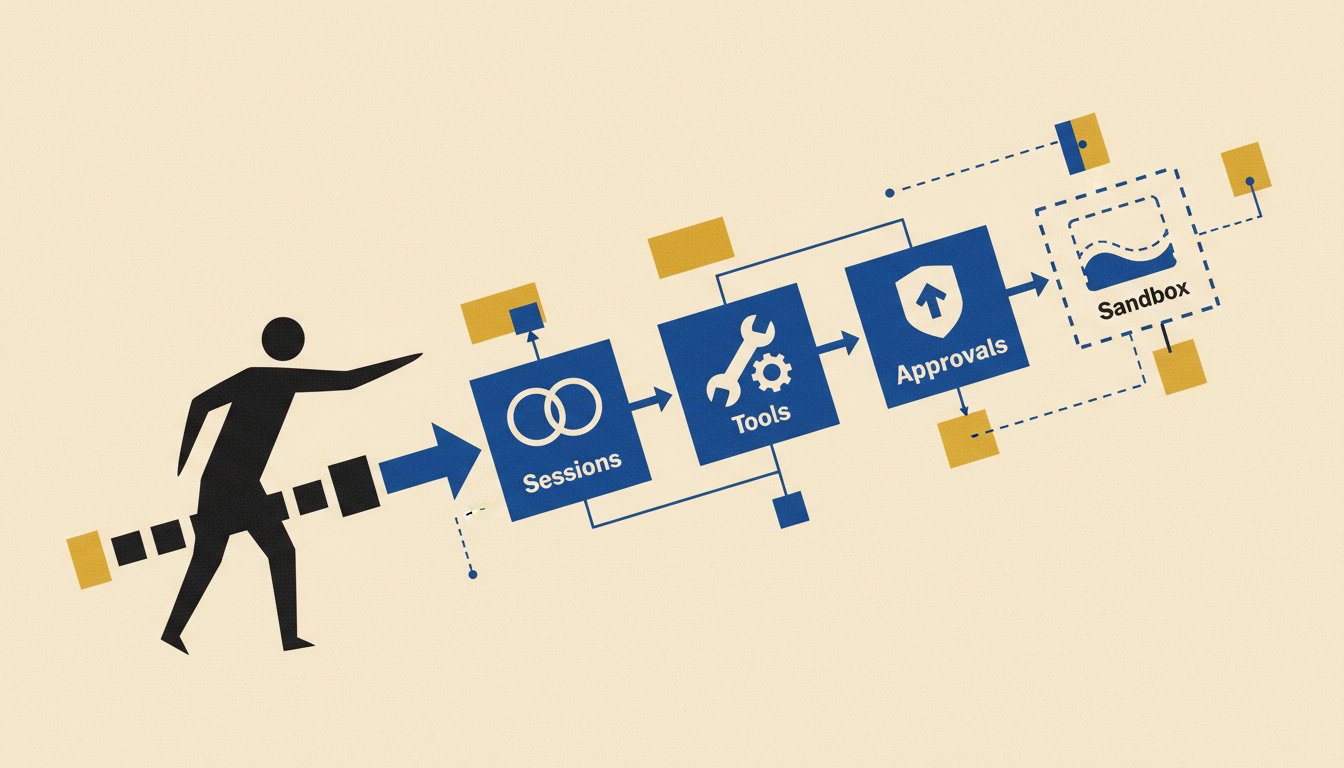
The mistake is to treat every new agent feature as a model feature. The harder product work has usually been underneath: keeping a session alive, passing the right context forward, coordinating multiple workers, and giving the system somewhere safe to run. OpenAI’s public beta, opened on September 10–11, moves much of that plumbing into a managed service. That changes the first question on an agent roadmap from “Can we build the harness?” to “What should this workflow do, and when should it stop?”
The Agents API exposes agents, environments, sessions, and events through one interface. It also includes orchestration, context compaction, and sandbox compute, according to AI Agents News. Context compaction means reducing an old, sprawling conversation into a usable working summary, rather than forcing every new step to carry the whole history. For a PM, the practical translation is simple: a research agent can keep working across a long session without your team having to stitch every state transition together by hand.
The harness becomes rented infrastructure
The beta is described as the same harness powering Codex, now available through a single API call, Agentic.ai reports. It exposes the machinery that makes an agent feel persistent and capable without asking each product team to recreate it. The reporting also says there is no extra fee beyond tokens, a detail worth checking against your own usage assumptions before you promise a cheap pilot.
Imagine a support workflow that gathers a customer’s account history, checks a policy document, drafts a response, and hands the case to a person when the evidence is thin. The interesting product decisions are not whether the agent can call each step. They are what counts as sufficient evidence, which actions require approval, what the customer sees while the work continues, and how the handoff is recorded. A managed session can reduce the engineering work needed to keep that process alive. It cannot decide whether the workflow is trustworthy enough to ship.
That distinction matters because infrastructure used to disguise product uncertainty. Teams could spend a quarter debating queues, retries, state storage, and tool wrappers, then discover that nobody had agreed on the agent’s job. Outsourcing the scaffolding removes one reason to delay, but it also removes one place to hide. The product brief now needs to name the workflow boundary: the inputs the agent may use, the tools it may call, the decisions it may make, and the point at which a human takes over.
Design the work, not the wiring
OpenAI’s beta also handles long-running sessions and sub-agent coordination, according to Enterprise DNA. That opens room for richer workflows, but it raises the bar for product definition. If one agent delegates part of a task to another, the user still needs a comprehensible answer to a basic question: who did what, with which information, and what remains uncertain?
This is where the PM role shifts from feature sequencing to workflow design. Start with one task that has a visible outcome, such as preparing a case summary or collecting the inputs for an internal review. Draw the path the work takes today. Mark every external system, approval, exception, and irreversible action. Then decide which steps an agent may own and which steps must remain explicit in the interface. The API can provide the session and environment. Your team still owns the contract with the user.
The second-order consequence is organizational. When foundational agent scaffolding becomes easier to buy, differentiation moves upward. The winning product may not have the cleverest prompt or the most elaborate orchestration. It may have the cleanest tool integrations, the least confusing handoffs, and the clearest policy for when an agent is allowed to continue. Those decisions will touch design, operations, legal review, and support, even if the implementation begins with one API call.
My Monday routine would be deliberately small. Pick one existing workflow with a clear owner and a painful amount of manual coordination. Write down its allowed tools, its stop conditions, and the evidence a reviewer needs before approving the result. Prototype the workflow on the managed harness, then watch the session events rather than only the final answer. If you cannot explain why the agent took each major step, the problem is not missing infrastructure. It is an unfinished product decision.