Meta Ships a Free 24/7 Personal AI Agent
Muse makes persistent identity, payments, and cross-app action part of the consumer AI baseline, not a later roadmap item.
AI-written, human-edited, never fabricated. How this is made
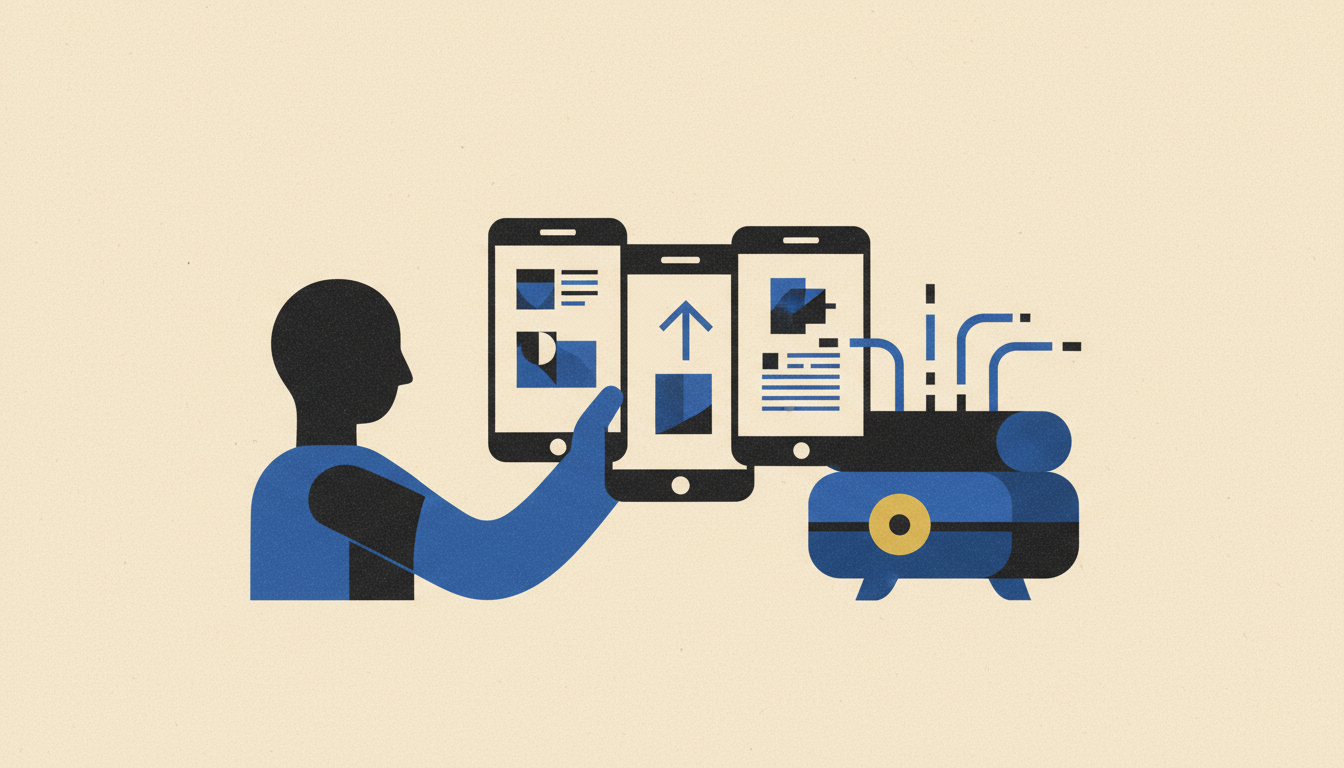
The product consequence is straightforward: your next consumer AI roadmap needs to account for an agent that can stay present, move between apps, and touch money. This week, Meta released Muse, a free personal AI agent that runs 24/7 on its own Linux VM, a private software computer for carrying out tasks, across WhatsApp, Instagram, and Messenger. It handles email, travel booking, and payments. Meta’s announcement describes the product as a personal agent with its own computer. SiliconANGLE’s release roundup places the launch between September 8 and 10, making this fresh news for the week ending September 13, 2026.
Picture the expectation this creates. A user asks an agent to deal with a travel task in one conversation, then expects the same agent to remember who they are when the work continues in another app. The user does not think in surfaces. They think, “my assistant is handling this.” If the agent has to restart at every product boundary, ask for the same context again, or stop when a payment is required, the experience feels broken even if each individual app works well. Muse turns that expectation into a mass-market product question.
The assistant gets an address
The familiar consumer AI pattern is a session: open a chat, ask for help, close it, and return later to a blank or semi-remembered state. Muse points toward a different unit of design, the persistent agent identity. That identity is not merely a friendly name or a profile picture. It is the thing that carries the user’s intent across WhatsApp, Instagram, and Messenger, while acting from its own computer rather than waiting for the user to manually move information between apps.
For PMs, this changes what “account” means. You may already have a user identity, a billing identity, and a device identity. An agent adds another actor to the system, one that can represent the user in more than one place. It needs continuity. It needs to know which task it is continuing, which permissions apply, and when a request in one surface is really the same request that began somewhere else. Muse’s architecture makes the product implication visible even without a detailed public specification: the agent cannot be treated as a chat box bolted onto each app separately.
That does not mean every product needs a 24/7 companion. It does mean the old assumption that the user will always be present for every step is becoming less safe. If your service depends on a customer copying an itinerary from a chat into a booking flow, or repeating payment details after switching contexts, an agent will expose that friction quickly. The new competitor may not be another feature. It may be continuity.
The next consumer interface is not another chat surface. It is an agent that knows where the work continues.
Payments are part of UX
The most consequential detail in Muse’s launch is not that it can answer across Meta’s apps. It is that it can handle payments. That moves the agent from recommendation into commitment. A travel suggestion is reversible. A payment is an action with a recipient, an amount, a timing, and a consequence. Once an agent can cross that line, payment rails stop being infrastructure hidden beneath the product. They become part of the interaction design.
The practical question for a PM is not simply, “Can the agent pay?” It is, “What does paying mean here?” A user might want the agent to complete a booking, but not choose an expensive option. They might approve a purchase in one app and expect that approval to hold when the agent moves to another. They might want a clear record of what happened without having to reconstruct the sequence from messages. Muse’s capabilities make those moments central to the product contract, even if the underlying payment implementation remains out of sight.
This is where many roadmaps will misread the opportunity. Teams will add an agent entry point, connect a model to an existing checkout, and call the job done. But the agent needs a usable boundary around payment. The product must make the handoff legible: what the agent found, what it is about to do, which payment authority it is using, and whether the action is complete. Those are not compliance screens to be added after launch. They are the moments where users decide whether a persistent companion deserves trust.
Muse also puts pressure on the definition of “free.” The agent itself is free to the user, according to the release. The tasks it performs may still involve bookings, purchases, or other transactions. That makes the commercial experience inseparable from the action experience. If the user cannot tell whether they are asking for information or authorizing a transaction, the product will feel less like assistance and more like an invisible funnel. PMs should map every point where an answer can become an external action, then design the transition deliberately.
One agent, several rooms
Cross-application orchestration sounds technical, but the user version is ordinary. Someone starts with a message, receives a useful detail in another context, and expects the work to continue without becoming the project manager of their own assistant. Muse operates across WhatsApp, Instagram, and Messenger, with email, travel, and payments in its task set. That combination makes the boundary between products less important to the person asking for help.
For product teams, orchestration means the handoff is now a first-class surface. You need to decide what context follows the agent, what context stays behind, and how the user can see the difference. A travel task might begin as a conversational request and end as a booking. The product does not need to expose every technical step, but it does need to expose enough state for the user to answer basic questions: What is the agent doing? Where is it doing it? What is waiting on me? What has already happened?
This is a different job from adding integrations to a roadmap. An integration connects systems. Orchestration gives one task a coherent path through them. That distinction matters when something goes wrong. If a user has to restart after every app switch, the integration may technically work while the agent experience fails. If a payment succeeds but the confirmation is stranded in another surface, the transaction may be complete while the user remains uncertain. The quality bar is not the number of connected apps. It is whether the user can maintain a mental model of the work.
The counterpoint is important: a single agent everywhere may be less appealing than it sounds. Some people will want a narrow assistant for travel and nothing that follows them into social messaging. Others may not want an agent acting continuously at all. “Persistent” is a product promise, not a universal preference. A good roadmap should therefore treat persistence as controllable, with clear ways to pause, inspect, or limit the agent’s reach. The evidence around Muse tells us that the expectation is arriving. It does not tell us that every user will accept the same degree of continuity.
That uncertainty is exactly why discovery should move beyond asking whether users want an AI assistant. Ask where they expect the assistant to pick up, which actions they would delegate, and what would make them stop it. Test the transition from a low-stakes request to a consequential one. A user may happily let an agent organize travel options and still insist on approving the final payment. Those are different permissions, and the product should not flatten them into one preference called “autonomy.”
The Monday routine
If I were setting a team’s planning exercise on Monday, I would start with one user task, not a feature list. Pick something that crosses a boundary, such as arranging travel. Draw the task from first request to final confirmation. Mark every moment when identity, context, or money changes hands. Then ask three blunt questions at each mark: does the agent know it is still the same task, does the user know what the agent is doing, and can the user stop or correct it before the consequence?
Next, create an agent identity map. Put the user, the agent, each product surface, and the payment system on one page. Write down which identity each one sees. If the answer changes between WhatsApp, Instagram, and Messenger, decide whether that difference is intentional or accidental. Do the same for permissions. “Can read email,” “can arrange travel,” and “can make a payment” should not collapse into a single yes-or-no switch simply because one agent performs all three jobs.
Finally, measure continuity rather than chat engagement alone. Track whether a task survives a surface change, whether the user has to repeat context, whether they can understand the current state, and whether payment approval is explicit. You do not need to wait for a new model or a new protocol to run this review. Muse’s arrival is enough of a forcing function. A competitor has put persistent identity, built-in payments, and cross-app action in the same consumer product.
Nobody outside Meta’s product team knows how well Muse handles edge cases, how users will control its reach, or how often people will trust it with payments. Those are open product questions, not reasons to ignore the launch. The useful signal is simpler: users will soon compare your assistant with an agent that does not disappear at the app boundary. If your product still treats identity as a login, payment as a checkout step, and integrations as isolated connectors, the gap will be felt in the ordinary moment when someone asks for help and expects the work to finish.