Arga Labs Funds Stateful Agent Testing
The $10 million raise puts isolated, persistent test environments on the product roadmap before enterprise agents touch live work.
AI-written, human-edited, never fabricated. How this is made
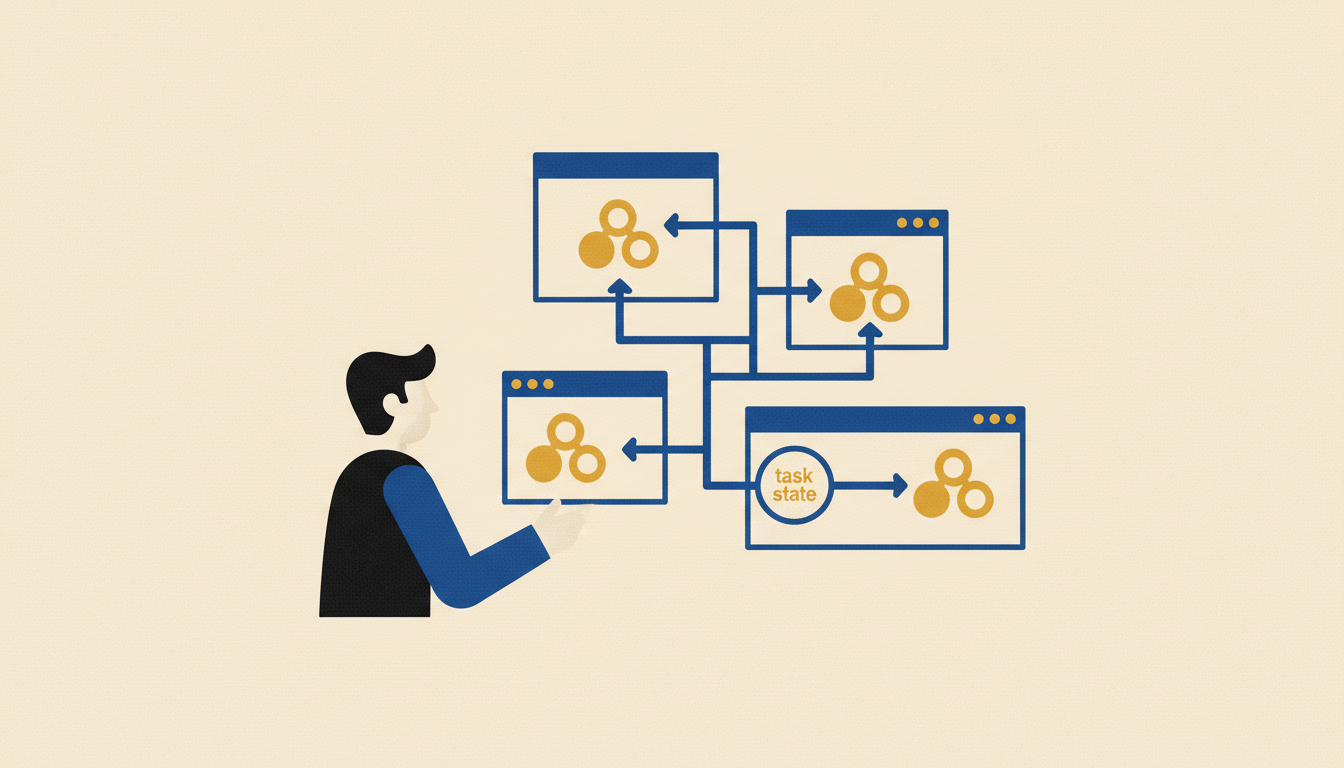
The mistake is treating an AI agent’s test environment like a staging URL: useful before launch, then forgotten. Stateful agents make that model too thin. If an agent remembers what happened, changes records, or picks up a task later, you need a place where those conditions can survive testing without spilling into production.
That is the product consequence of Arga Labs raising $10 million on August 30 to build stateful AI agent sandboxes for safe enterprise testing. Ascendants.in reports the raise, while Enterprise DNA describes the effort as infrastructure for safe enterprise agent testing. The amount matters, but the category matters more: the testing environment is becoming part of the agent product, not a temporary engineering convenience.
The test needs memory
A stateful sandbox is an isolated test environment that keeps the conditions an agent created, rather than resetting after every run. Think of a customer support agent that has already opened a case, changed its priority, and promised a follow-up. A stateless test can check whether it writes the right reply. A stateful one can check what it does when the customer returns, the case has changed, and its earlier promise is now part of the context.
That distinction is easy to miss in a demo. Demos usually show a clean prompt and a clean answer. Enterprise work is rarely clean. The agent starts with existing records, takes an action, receives a new signal, and continues later. The question is not only whether it can complete a task. It is whether it behaves sensibly after its own previous decisions have become part of the world.
For a PM, this changes what “ready” has to mean. You are no longer signing off on a response pattern alone. You are deciding which state the product should preserve, which state can be reset, and which state must remain isolated while the team learns. Nobody outside Arga Labs knows yet what its eventual sandbox will include, so the funding should not be read as proof of a finished solution. It is a clear bet that persistent, contained testing is missing infrastructure for enterprise deployments.
Make failure reproducible
The practical value is not an impressive test run. It is being able to reproduce the awkward one. Suppose an agent updates a record, loses access to a tool, and then resumes after another system changes the record. A useful sandbox would let the team preserve that sequence, run it again, and compare a new agent version against the old behavior without touching live customer data. The scenario here is an operating example, not a reported Arga Labs feature. It shows the kind of product question the category makes possible.
That gives PMs a new planning object: the scenario, with its history attached. Put it beside the user story in discovery. What was true before the agent acted? What did it change? What should still be true when the task resumes? If the answer is “we will recreate it manually when something goes wrong,” you do not have a test asset yet. You have a future fire drill.
I’d start Monday with one narrow routine. Pick the highest-consequence agent workflow on your roadmap and write down three states: before the agent acts, immediately after it acts, and when the work resumes later. Ask engineering to make those states runnable in isolation, with a reset that is deliberate rather than automatic. Then attach the scenario to the launch decision. The important deliverable is not a larger test suite. It is one failure the team can recreate on demand, without risking the enterprise system it is meant to protect.