Nvidia Buys Hugging Face’s Distribution Layer
The $12.9 billion deal turns model access, licensing, and placement into product strategy, not plumbing.
AI-written, human-edited, never fabricated. How this is made
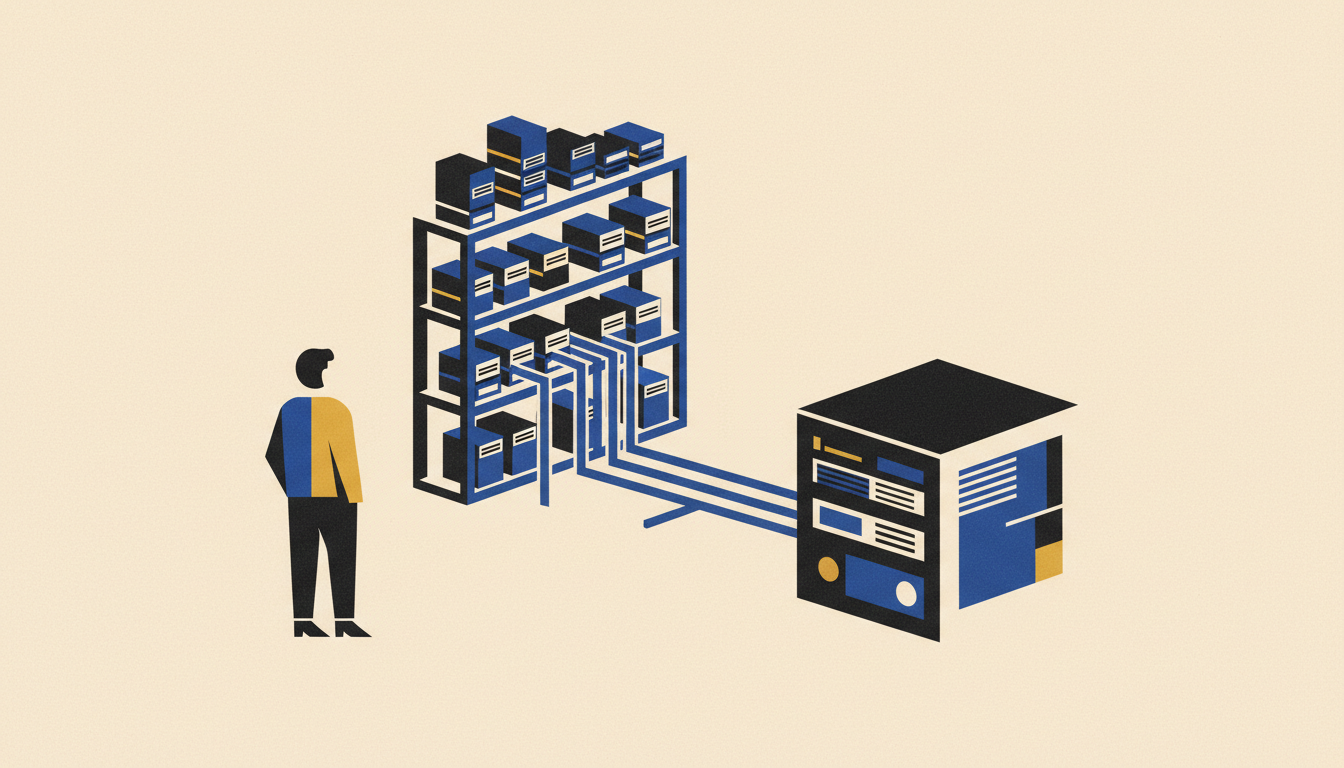
The next model decision on your roadmap may not be which model to use. It may be who controls the shelf where your team finds it, downloads it, adapts it, and sends demand back toward compute. On August 27, Nvidia agreed to acquire Hugging Face for $12.9 billion. The price was nearly three times Hugging Face’s 2023 valuation. That is a large sum for a company whose strategic value sits between models and the products built on top of them.
The Forbes report describes the move as Nvidia’s attempt to shape the model distribution layer. Latent Space’s account puts the deal at $13 billion and frames it alongside an OpenAI retrospective on a Hugging Face incident. The exact rounding matters less than the signal. Nvidia is paying to influence where models travel and, with them, where compute demand goes.
For product managers, that changes the category. A model hub can look like infrastructure, the same way a cloud region or a package registry can look like infrastructure. You use it because it is there. You do not put it in the competitive moat column. This acquisition makes that assumption harder to defend. Distribution is now part of the product surface.
The shelf is strategic
A model hub is the shelf between a model’s release and its use. It gives teams a place to discover models, compare options, retrieve files, and begin the work of adapting them. “Derivative licensing” is the part that determines what you can legally do with a modified version, and under what conditions. Those details rarely appear in a polished product demo. They become very visible when legal asks whether the model can ship, when procurement asks who stands behind it, or when an engineering team discovers that a promising model cannot be used in the intended way.
The hub therefore affects more than discovery. It can influence which models are easy to evaluate, which derivatives are practical to distribute, and which paths lead to paid compute. That does not mean the owner controls every choice. It means the owner sits at a consequential junction. A team can still choose another source, another model, or another compute provider. But the default path has value, particularly when the product team is moving quickly and the cost of a wrong turn is hidden in integration work.
Nvidia’s purchase makes that junction a corporate asset. The company is not merely adding a community or a catalog to its portfolio, at least not in the strategic reading offered by this week’s reporting. It is buying influence over the route from model availability to model use. The route is where a technically interesting artifact becomes a dependency in a product roadmap.
The model hub is no longer a neutral shelf if the company selling the compute owns the store.
That is the uncomfortable simplification. It is also the useful one. PMs do not need to predict every future model or licensing dispute to act on it. They need to identify which external layer determines whether their roadmap can keep moving.
Moats move upstream
Most product strategy still treats distribution as the final step. Build the capability, package it, then find the channel. In model-driven products, the channel can arrive first. The available model, its documentation, its derivative terms, and the ease of running it all shape what gets built in the first place. Distribution is not only how the finished product reaches users. It is how the raw capability reaches the team.
That gives the hub a form of upstream leverage. If a model is easy to find and adapt, it has a better chance of entering discovery conversations. If its licensing is clear enough for a team to proceed, it can survive the move from prototype to roadmap. If the route from model to compute is convenient, experimentation can turn into sustained demand. None of those outcomes is guaranteed by ownership. They are simply the strategic possibilities implied by controlling the junction.
The acquisition’s price supplies the bluntest evidence that Nvidia sees those possibilities as valuable. Hugging Face was valued at roughly one-third of the proposed purchase price in 2023. The premium is not a footnote. It is the number that tells product leaders this is not being treated as a small tooling purchase. Nvidia is valuing access to a distribution layer at infrastructure scale.
That does not automatically create a durable moat. A hub can lose relevance. Models can move. Developers can route around it. A competitor can build a better discovery experience or a more permissive licensing system. The deal may also create concerns for teams that prefer a neutral meeting place for models and users. The reporting establishes Nvidia’s intent to shape distribution. It does not establish that the strategy will work.
That distinction matters. A strategic asset is not the same thing as a defensible advantage. Product teams should test whether the acquisition changes their actual options, not simply repeat that it must. Can your team still source equivalent models elsewhere? Can you inspect and negotiate derivative rights without depending on one owner’s workflow? Can you move a model and its evaluation history if the hub’s policies change? These are product questions because the answers affect delivery, cost, and continuity.
Read the dependency
The first practical change is in discovery. When your team evaluates a model, record where it came from and why it was easy to choose. Was it the model’s quality, or was it the surrounding access layer? Did the hub make the documentation, files, and comparison process available in one place? Did the team select the model because it was best, or because it was closest to the existing path to compute?
That distinction is easy to miss. A roadmap can acquire a dependency before anyone has named it. The dependency may be a model, but it may also be the hub that makes the model legible and usable. If that hub changes ownership, its commercial incentives may change with it. The fact of ownership is fresh. The operational consequences are not yet known. The planning response can still be immediate.
Start with the inventory you already have. For every model that matters to a live or planned feature, attach the source, the derivative licensing terms, and the migration path. Do not treat the hub link as a citation that disappears after evaluation. Treat it as part of the bill of materials. If a model is adapted, note what rights govern the derivative. If the team relies on the hub for distribution, note what would have to be rebuilt if access or terms changed.
This is not a demand to abandon Hugging Face. That would be an unsupported conclusion, and probably a wasteful one. A distribution layer can be useful and strategically important at the same time. The point is to stop calling it neutral when a major compute company has paid $12.9 billion to shape it.
The second change is in licensing review. PMs do not need to become lawyers, but they do need to stop treating derivative rights as an implementation detail. The license determines whether a prototype can become a product without a late-stage rewrite. It also affects how portable the work is. A derivative that cannot be redistributed in the way your product requires is not a shortcut. It is a future decision you have postponed.
The third change is in competitive analysis. Do not compare model providers only on quality, latency, or price. Ask who controls the route by which models are found, adapted, and connected to compute. A rival with an ordinary model and a stronger distribution path may be more dangerous than a rival with a better model that nobody can easily use. The product advantage may sit one layer away from the model itself.
There is a counterpoint. Model distribution may remain more open than this acquisition implies. Teams can choose alternatives. Competitors can offer other hubs. The model market is not a single shelf with one shopkeeper. Nvidia’s ownership does not erase those routes, and the evidence this week does not show that any customer has been locked in or that any licensing term has changed.
Still, neutrality is not the same as openness. An open model hub can be broadly accessible while remaining strategically valuable to its owner. The important question is not whether other routes exist. It is whether one route becomes the default for enough discovery, derivative work, and compute demand that its owner can influence the economics around it. Nvidia’s willingness to spend nearly three times Hugging Face’s 2023 valuation suggests it believes the answer could be yes.
That is the number to carry into planning. Not because it predicts the outcome, but because it prices the layer your roadmap may have been receiving for free. Product teams have spent the last few years learning to ask which model powers a feature. They now need to ask which distribution layer powers the choice. The answer may determine who gets to shape the next feature before your team has written it down.