Anthropic Cuts Fable and Mythos Cache Costs
The 75% reduction makes long-context agent loops cheaper to run, giving product teams a reason to revisit use cases that previously failed their margin tests.
AI-written, human-edited, never fabricated. How this is made
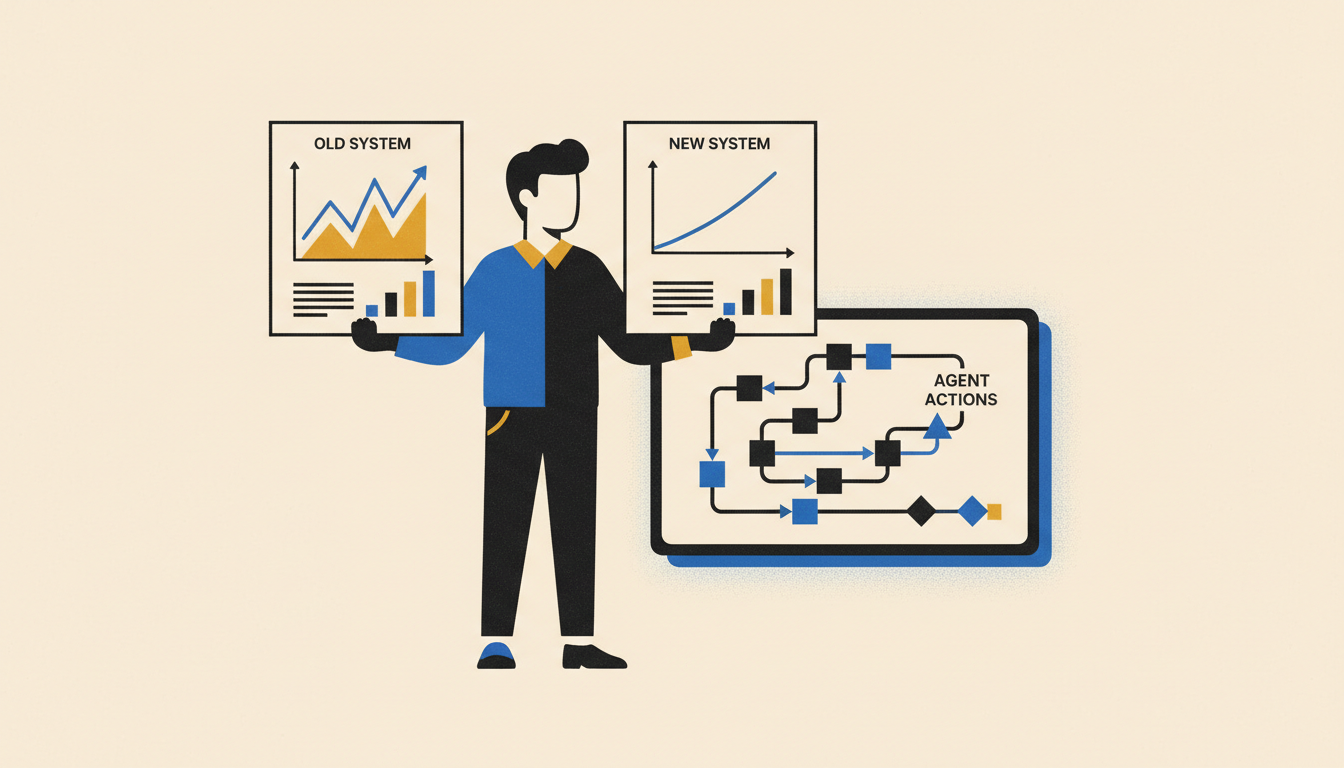
A long-context agent can now spend less time worrying about its memory bill. Anthropic launched Claude Fable 5.1 for general use and gated Mythos 5.1 between September 1 and 3, with cache reads priced 75% lower. For product teams, that is the consequential part of the release. The benchmark score will help win an evaluation. The cache discount can change whether the product survives production.
A cache read is the cost of reusing context a model has already processed, rather than treating every repeated block as new work. That matters when an agent carries a large brief, codebase, terminal history, or set of instructions through many turns. The model may be capable of handling the context. The question is whether your unit economics can handle the repetition.
Anthropic’s announcement pairs the pricing change with a 1M context window and a Terminal-Bench 4.0 score of 55.8. Those details establish the intended market: products that ask models to work through large technical environments, not just answer a short prompt. ZDNet’s release tracker also frames the upgrades around agents. The discount is therefore attached to a specific product bet, not offered as a general coupon for every AI feature.
The loop gets cheaper
Consider an agent that reviews a large repository, edits a file, runs a command, reads the result, and repeats. A PM does not need to predict the model’s entire behaviour to see the financial pressure. Each turn can require the same operating context again. If cache reads previously represented 100 cost units for a fixed workload, a 75% reduction brings that repeated portion to 25. The currency does not matter for the direction of travel. The spend falls to one quarter for that slice of usage.
That creates room for products that were technically plausible but commercially awkward. A support agent could retain more case context between actions. A coding product could keep a larger working environment available across terminal steps. An internal operations tool could afford more attempts before a human takes over. These are product examples, not promises from Anthropic. The useful point is narrower: when repeated context is a material cost, cheaper reads improve the margin on every workflow that depends on it.
The effect is not a free pass. Cache reads are only one part of a model bill, and the evidence does not establish the total cost of a Fable or Mythos request. A lower repeated-context charge cannot rescue a workflow that calls the model too often, fails too frequently, or requires expensive human review. It does, however, give teams a cleaner lever to test. You can isolate the workloads where context is reused heavily and measure whether the discount reaches gross margin rather than disappearing into other costs.
Cheaper memory changes which agent ideas are worth putting through the calculator.
Price changes the roadmap
The immediate PM task is not to add “Fable 5.1” to a model dropdown. It is to rerun the economics of agentic features whose context was previously too expensive to keep alive. Start with workflows that need long context and repeated turns. Compare the old and new cache-read assumptions against the same task completion rate, latency target, and review burden. The benchmark score of 55.8 may support a technical evaluation, but it does not answer the product question. A passing benchmark is not a margin model.
The release also introduces a packaging decision. Fable is general, while Mythos is gated. That distinction matters when a product team moves from experiment to access planning. A roadmap can assume a model exists and still fail because the required model is not available on the terms, access path, or operational controls the product needs. Anthropic’s change makes the incentive explicit, but it does not remove the licensing and guardrail work that comes with putting an agent in front of customers.
Nobody outside the lab knows yet how these models will behave across real agent workloads, and the supplied evidence does not claim otherwise. Teams should treat the 75% figure as a pricing input, not a forecast of product profitability. Still, pricing inputs can be more decisive than another benchmark point. If your agent rereads the same million-token working set on every turn, reducing that repeated charge by three quarters is not a marginal improvement. It is a reason to reopen the spreadsheet.